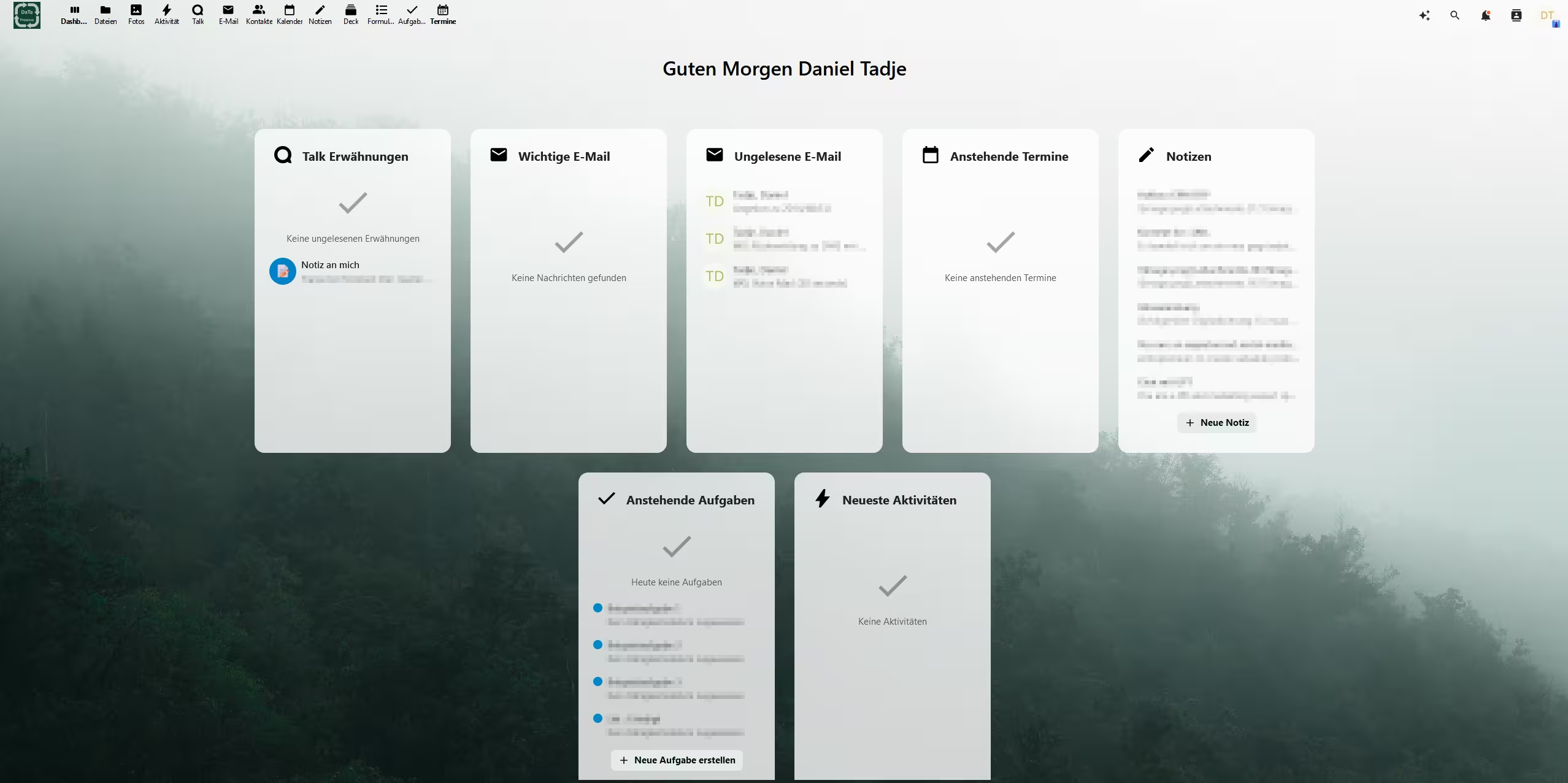
In today's digital world, small and medium-sized enterprises (SMEs) are faced with the challenge of developing efficient business processes while maintaining control over their data. One solution that proves to be particularly beneficial is Nextcloud.
What is Nextcloud?
Nextcloud is an open source platform that allows companies to run their own cloud infrastructure. This means you retain full control over your data and are not dependent on external providers.
Advantages of Nextcloud for SMEs
1. Kostenersparnis
Compared to commercial cloud solutions such as Microsoft 365 or Google Workspace, Nextcloud offers significant cost advantages. In comparison, the major providers charge monthly license fees per user, whereas this is free with Nextcloud in the self-hosted version. Apart from the costs for server provision, there are no other fees.
Example calculation:
- Microsoft 365 Business Standard: from €5.60 per user/month (Microsoft, December 1st, 2024)
- Google Workspace Business Starter: from €5.75 per user/month (Google, December 1st, 2024)
For a company with 10 employees, this results in annual costs of at least €672 (Microsoft 365) or €690 (Google Workspace). With Nextcloud, these license fees are completely eliminated and, in addition, your own system can be expanded free of charge with fully integrated apps to include even more expensive packages.
2. Efficient business processes and improved collaboration
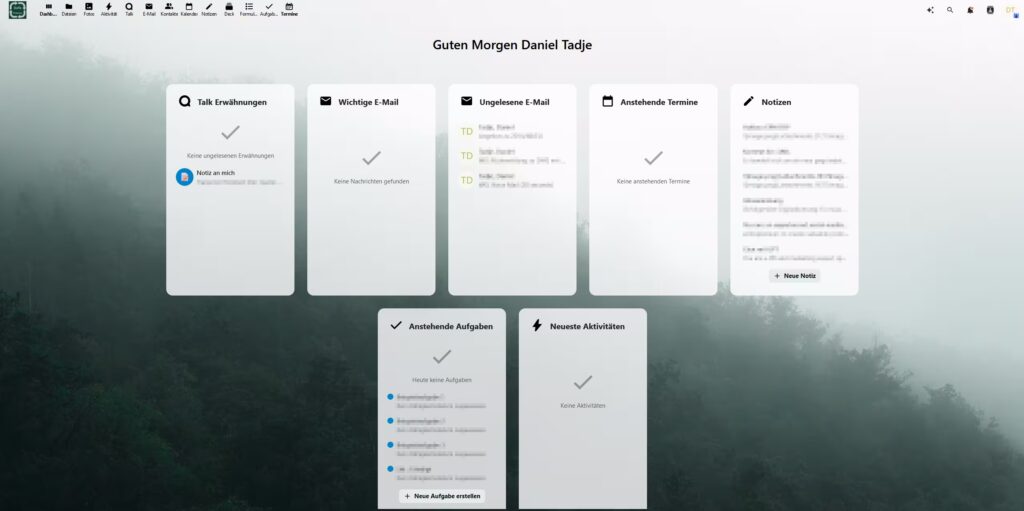
Nextcloud offers numerous features to establish efficient business processes and promote collaboration within the team:
- File sharing and collaborative editing: Employees can share documents and edit them together in real time. Both internally and with external contacts.
- Calendars and contacts: Shared calendars and address books make scheduling and communication easier.
- Integration of external applications: APIs allow Nextcloud to be seamlessly integrated into existing software landscapes, such as accounting or CRM systems.
Practical example: A sales team can use Nextcloud to centrally store offers and contracts, edit them together and synchronize them with the CRM system (customer relationship management system).
3. Data security and GDPR compliance
Storing sensitive company data with large providers can be problematic in terms of the GDPR. For example, the data protection compliance of Microsoft 365 has been questioned by German supervisory authorities. (Dr. Datenschutz)
With Nextcloud you run your own cloud on your own servers, which gives you complete control over your data and makes it easier to comply with GDPR.
4. Automation of efficient business processes
By storing data centrally in Nextcloud, recurring tasks can be automated. For example, incoming invoices can be automatically recorded, processed and archived.
Note: More detailed blog posts on automation with specialized no-code / low-code tools (Zapier, make.com, Power Automate and n8n) will follow shortly.
Open Source Character: Advantages and Disadvantages
Advantages:
- Flexibility: Adaptation of the software to individual needs.
- Transparency: Insight into the source code increases security.
- Community Support: Active developer community provides regular updates and support.
Disadvantages:
- Technical effort: Setup and maintenance require technical know-how.
- Support: No official customer support, but support from the community.
As an experienced IT service provider, I support you in the implementation and maintenance of Nextcloud, including installation via Docker.
Conclusion
Nextcloud offers SMEs a cost-effective and data protection-compliant solution for setting up efficient business processes. The platform promotes team collaboration, enables the automation of processes, and reduces licensing costs.
Let's find out together how Nextcloud can help your company move forward. Arrange a free initial consultation now!
For more information, visit the official Nextcloud pages and the GitHub repository.
 English
  Deutsch
Leave a Reply